
Key points
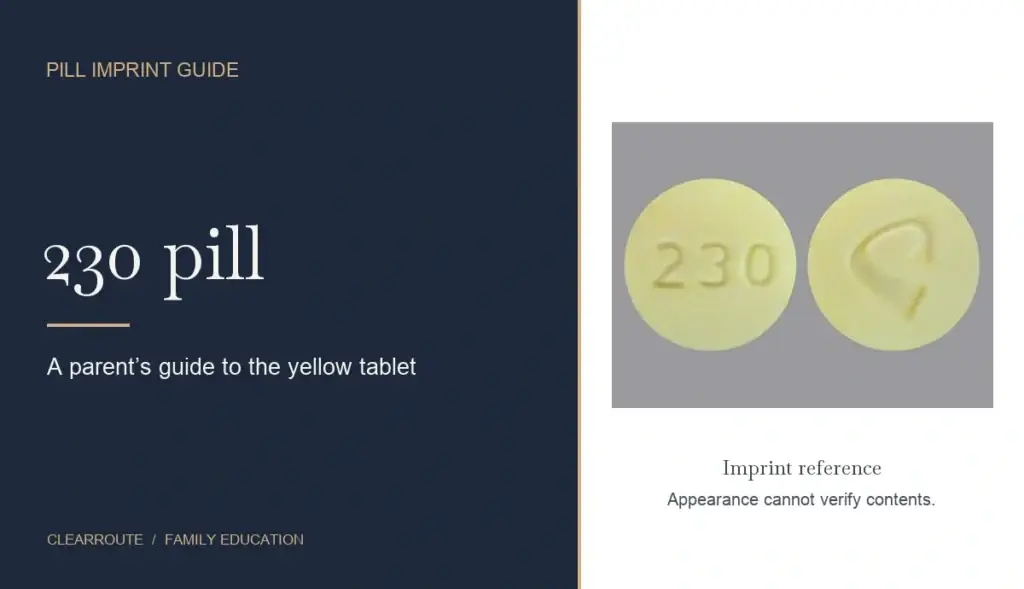
- A yellow, round tablet with 230 on one face and a crescent-like mark on the other matches a labeled oxycodone and acetaminophen product. The number 230 is an identifier, not a dose.
- There are two separate concerns if it was swallowed: an opioid can slow breathing, and too much acetaminophen can injure the liver before a person feels seriously ill.
- A pill in a teen’s jacket does not tell you who took it. Ask about possible exposure before asking who owns it.
A parent empties a jacket before washing it and finds a yellow tablet marked 230. The first call might seem like an easy choice: send a photo to someone who works in healthcare. But a reply that says “looks like a pain pill” leaves the most urgent question unanswered. Is there another tablet missing, and could someone have swallowed it? If the answer is yes or uncertain, get poison advice before continuing the search.
What the 230 imprint matches
A U.S. prescription label describes a round yellow tablet marked 230 opposite a curved, crescent-like symbol. The labeled product contains 10 mg of oxycodone hydrochloride and 325 mg of acetaminophen. These amounts describe what the manufacturer put in that specific medicine. They do not establish the ingredients or strength of an unknown tablet. (National Library of Medicine, n.d.)
Families sometimes search for a “yellow Percocet.” Percocet is a brand name associated with the same two active ingredients. Knowing the brand name does not make a loose tablet traceable to a particular prescription. Also, acetaminophen is sometimes shortened to APAP on medication paperwork. That abbreviation matters if someone has also taken a cold medicine or another pain reliever containing the same ingredient.
Why both ingredients matter
Oxycodone is an opioid used for pain. Even a genuine prescription tablet can cause dangerous sedation and breathing problems in someone for whom it was not prescribed. Mixing an opioid with alcohol or other sedating drugs can increase the danger. Prescription oxycodone also carries a risk of misuse and addiction. An appropriately prescribed medicine in its patient’s possession is a different situation from taking a loose pill supplied by a friend. (National Library of Medicine, n.d.)
Acetaminophen poses a different problem. A family might focus on whether their teen looks sleepy and overlook another medicine taken earlier that day. Too much acetaminophen can harm the liver, and early symptoms do not reliably show the severity. Tell Poison Control about all products the person remembers taking. Do not try to calculate a safe threshold from an imprint, a count of remaining tablets, or a teenager’s estimate. (National Library of Medicine, n.d.)
Three questions before the laundry goes back in
First ask: “Did anyone take one of these?” If a teen says someone did, ask who and when. If they say they are not sure, pass that uncertainty on when you call. An honest “I don’t know” is more useful than a guess that sounds precise.
Next ask where the tablet came from. A pharmacy can check its own dispensing record, including the manufacturer associated with a family member’s prescription. A friend saying “it came from my surgery” is not the same as that record. Even a genuine medicine dispensed to a friend was not prescribed to your child.
Finally, ask whether anyone else could have reached it. Check on younger children before starting a longer conversation with the teen. Keep the tablet and any original packaging away from children and pets. If a medical professional asks for details, describe both faces and the circumstances of discovery without tasting, crushing, or breaking the tablet.
What a 230 photo cannot settle
A clear photograph can help a pharmacist understand your description. It cannot show the ingredients inside a pill. DEA has documented counterfeit tablets that copy prescription opioid markings. Its seizure data are evidence about the tablets tested; they do not tell you how common a fake 230 is in your neighborhood, or what was in the tablet you found. (U.S. Drug Enforcement Administration, 2026)
This is why inspecting the shade of yellow more closely will not resolve the important decision. A perfect visual match is still not permission to take the pill. If nobody was exposed and an old prescription is the likely source, ask the dispensing pharmacist about identification, storage, and an appropriate take-back option. Do not put the loose tablet back into a bottle on the strength of a photo match.
What to say to a teen who is afraid of getting in trouble
Lead with the specific discovery: “I found a yellow tablet in the jacket. The first thing I need to know is whether you or a friend took anything.” Give them a moment to answer. Asking about the price, a friend’s name, or whether school rules were broken can wait until everyone is safe.
If a teen says it was for pain, ask about the pain itself. Did an injury go untreated? Was there a reason it felt easier to ask a friend than a parent or clinician? Offering an appointment for the underlying problem communicates that telling the truth will lead to care. It does not mean accepting shared prescription medicine as a solution.
If a relative recently had surgery, speak with them privately rather than asking the teenager to defend a theory about missing pills. Arrange secure storage for prescribed medicines and ask the pharmacist what to do with unused tablets. One misplaced pill calls for an explanation, not a public accusation.
When another conversation is not enough
Repeated discoveries, use outside a prescription, or a teen reporting that they feel sick when they stop are reasons to arrange a professional assessment. Write down the dates and what the teen actually reported. The clinician can assess pain, substance use, and other health needs together. Finding one tablet does not diagnose addiction; waiting for proof of addiction is not necessary to ask for help.
ClearRoute’s family coaching and education can help parents decide what to say and how to follow through. For help organizing a non-emergency conversation, request a consultation. For a possible ingestion, call Poison Control or emergency services first.
When your child is a teen or an adult
If your child is a teen, involve their pediatrician or an adolescent health professional after urgent exposure questions are addressed. Ask the provider how your teen can speak privately and how you can help with follow-up. If you found the 230 tablet in your adult child’s jacket, offer to call a clinician together or provide a ride. Ask what they want you to share; finding the pill does not give you access to their medical records. ClearRoute works with parents in both situations, including families seeking intervention support for a teen.
Frequently asked questions
Does 230 mean 230 milligrams?
No. It is the imprint on the referenced product. Its label lists two different active ingredients and strengths; neither can be confirmed in a found pill by reading the number.
Is the crescent on the reverse important?
Yes, as a detail to report to a pharmacist. Looking at only one side makes a description less useful. Even a match on both sides cannot authenticate the tablet.
What if my teen says they also took Tylenol?
Tell Poison Control immediately about both products, along with any other medicines and the timing if known. Acetaminophen is present in Tylenol and in the labeled 230 combination product. Do not wait for abdominal pain or other symptoms.
Does naloxone treat the acetaminophen risk?
No. Naloxone can temporarily reverse opioid effects on breathing. It does not treat acetaminophen poisoning, and an apparent recovery after naloxone still needs emergency evaluation. (Centers for Disease Control and Prevention, 2024)
Can the pharmacy tell me who owned it?
A pharmacist can discuss a possible medication match and check appropriate prescription records. A loose tablet by itself cannot tell a pharmacist who owned it, took it, or put it in the jacket.
Sources
Centers for Disease Control and Prevention. (2024, April 2). What to do if you think someone is overdosing. https://www.cdc.gov/stop-overdose/response/
National Capital Poison Center. (n.d.). First aid guidelines. https://www.poison.org/first-aid-for-poisonings
National Library of Medicine. (n.d.). Oxycodone and acetaminophen tablets [Drug label]. https://dailymed.nlm.nih.gov/dailymed/drugInfo.cfm?setid=03c9ff0d-46e8-448c-944a-7ad59d1afd6d
U.S. Drug Enforcement Administration. (2026). Counterfeit pills seized in the United States between January 1, 2024 and December 31, 2025. https://www.dea.gov/sites/default/files/2026-10/US-2024-2025%20Counterfeit%20Pill%20Data.pdf
Featured photograph: 230 product photograph from the American Health Packaging label on DailyMed. The reference image does not authenticate a found tablet.